
Until recently, only professional sporting identities or prominent public figures who openly identified as Christian, had to personally count the cost of the moral conflict between their faith and the agenda of LGBTQI+ pride movement.
But, as this movement’s influence continues to spread, ordinary Christians in every domain of society may discover this conflict will become their reality. Whether it is the ‘Pride round’ of your local sporting code, ‘Wear it Purple’ day at your place of employment, or some other soon-to-be-announced event at your local school, the Gay Pride movement continues to actively promote an ethical agenda at odds with long-standing Judeo-Christian morals.
By its own admission, the Pride movement actively encourages and promotes openness about LGBTQI+ sexual identities, culture, and experience, and, as one of its advocate groups openly states, seeks to ’…challenge harmful social cultures.’
Given that ordinary Bible-believing Christians may find themselves being identified with these perceived ‘harmful social cultures’–and consequently in a position of potentially having to comply with the new cultural norms against their moral convictions–a crisis of conscience is looming. Indeed, in order to ‘get along’ in a Post-Christian society the sincere Christian will be seriously challenged to ‘go along’ with the progressive ‘new’ morality. And, this is a matter of some weight, for the outcome of these moral choices will not be without substantive consequence–social exclusion now or eternal exclusion later!
So, when Christians are challenged to choose against their biblically grounded faith, what should they do? With so much at stake, it is vitally important for Christians to have a sound biblical precedent for making decisions on critical ethical matters like these.
Now to the issue…
Whatever else it might be promoting, the LGBTQI Pride movement aims at the the normalisation of homosexuality within mainstream society; the practice of which is explicitly set out in Holy Scripture as contrary to God’s will. Being closely associated with other forms of immorality, like greed, corruption, idolatry, fornication and adultery, the New Testament explicitly states that unrepentant practise of these things precludes a person from God’s kingdom: ‘Do you not know that the wicked will not inherit the kingdom of God? Do not be deceived: Neither the sexually immoral nor idolaters nor adulterers nor male prostitutes nor homosexual offenders nor thieves nor the greedy nor drunkards nor slanderers nor swindlers will inherit the kingdom of God.’ 1 Cor 6:9-10 (NIV)
Moreover, in outlining God’s displeasure over a similar catalogue of sinful practices in the opening chapter of his Romans epistle, St Paul not only decries the offensiveness of practising these sins, but the further offensiveness of approving of those who practise them: ‘Although they know God’s righteous decree that those who do such things deserve death, they not only continue to do these very things but also approve of those who practice them.’ Romans 1:32 (NIV)
Whilst, Christians may sympathise with the plight of LGBTQI community members, who may well have some very legitimate concerns that deserve a sympathetic hearing, participating in ‘Pride events’ extends well beyond showing concern for validly aggrieved individuals; it reaches into the space of publicly validating an ideology that proudly advances morals contrary to God’s will.
Interestingly, though not surprising, a ‘special exemption’ is being cleverly offered by many Christian leaders, who suggest that Paul’s ‘idol meat’ argument in 1 Corinthians 8, enables the mature Christian to distance themselves from the promotion of immorality whilst benignly associating with its material instruments.
Thus translated and applied to our discussion, the argument suggests that a mature Christian may wear a Pride jersey or some material item validating the LGBTQI agenda (which are just benign forms of clothing etc) without validating the attending immorality being promoted, because ‘their intent’ is to show love to the individuals associated with the event and not support the cause of the event. In short, they are reclaiming the Pride event for a ‘higher’ divine purpose–validated by this particular New Testament text!
It sounds noble, right?
However, I want to suggest that Paul’s line of reasoning in 1 Corinthian 8-10, pertaining to idol meat, is actually advocating quite a different message to the aforementioned interpretation.
So let us look at the text in question…
Paul’s interaction with the Corinthian Christians and idol meat encompasses the passages of 1 Cor 8-11:1. Let us be clear, Paul is not addressing an issue between ‘strong’ (mature) and ‘weak’ (immature Christians), but rather engaging Corinthian converts who believed their superior ‘knowledge’ enabled them to engage in culturally acceptable, but morally questionable practices (eating meat associated with idolatry): ‘ Now about food sacrificed to idols: We know that we all possess knowledge. Knowledge puffs up, but love builds up. The man who thinks he knows something does not yet know as he ought to know. But the man who loves God is known by God.‘ 1 Cor 8:1-3 (NIV)
Let me again stress, Paul is not engaging mature Christians. On the contrary, he is engaging with self-assured ignorant believers who are ‘too clever by half’, and who are acting in ways detrimental to the spiritual well-being of fellow Christians, unbelievers, and consequently God’s glory.
In carefully researched article, David E. Garland outlines the ‘real’ nature of Paul’s engagement with them: ‘1 Corinthians 8:1-11:1 has to do with idol food and associations with idolatry – the interaction between Christians and idol worshippers. It does not follow that since Paul rejected Jewish food laws that erected barriers between Jews and Gentiles he condoned the eating of idol food. Idol food is a different matter entirely that introduces the baleful influence of syncretism and polytheism…The basic issue has to do with what Paul regards as forbidden idolatrous behaviour by those who perceive themselves as endowed with liberating knowledge ….He did not pass off eating of idol food, with full awareness of its idolatrous connections, as a matter of indifference. It is a dangerous, sinful act since Paul explicitly links idol food to idolatry in 10:19-20 and never says, Eat idol food as long as the weak are not caused to stumble.’ David E Garland
Firstly, in explicitly addressing the issue of eating food associated with idolatry (1Cor8:4), the Apostle establishes that an idol ‘itself’ is nothing, and that there is only one ‘true’ God, and that idol related meat is not intrinsically tainted with evil. However, for Paul, the real problem is the idolatry itself, the practice of worshipping or giving deference to a contrived false-god. When a Christian associates with this practice, no matter how apparently benign that association, they are validating it; and by extension giving the impression to anyone, especially immature Christians, that idolatry is not a problem–potentially leading to their spiritual demise, ‘So this weak brother, for whom Christ died, is destroyed by your knowledge.’ 1 Cor 8:11 (NIV)
Secondly, in further validating his case to these ‘self-assured’ Corinthians, he points to his own self-effacing ministry. Even though Paul has many ‘rights’ as an apostle (many freedoms and privileges), he always subjugated them to the greater cause of the advancement of God’s kingdom and the gospel of Jesus Christ, ‘Though I am free and belong to no man, I make myself a slave to everyone, to win as many as possible.’ 1 Cor 9:19 (NIV) Though Paul’s knowledge of his ‘station’ would ordinarily grant him automatic privilege, his love for those who need to know Christ prevents him form laying claim to any concession that might be construed as a stumbling block, hindering the lost and immature from entering into a full relationship with Jesus Christ.
Finally, though Paul’s argument against his ‘knowledgeable audience’ might have had a ‘soft start’ in chapter 8, it comes around to a ‘hard finish’ in chapter 10, as Garland states, ‘Their recalcitrance necessitates his lengthy response. The argument is subtle. He does not immediately denounce their position but chooses a more circuitous route that winds its way through various facets of the problem turning it this way and that in an attempt to convince them to flee idolatry(10:14).
The so-called ‘knowledgeable’ believers in Corinth were sure they were right, but were shown to be so wrong.
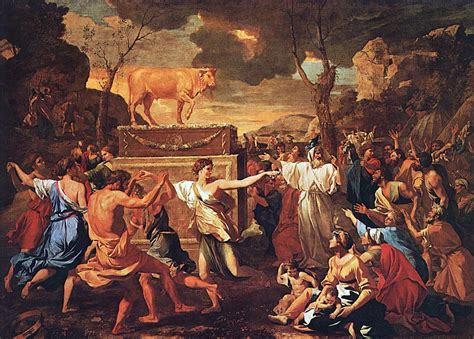
Paul illustrates how this kind of false assurance can shipwreck a person’s faith, from the story of the Exodus, ‘For I do not want you to be ignorant of the fact, brothers, that our forefathers were all under the cloud and that they all passed through the sea. They were all baptised into Moses in the cloud and in the sea. They all ate the same spiritual food and drank the same spiritual drink; for they drank from the spiritual rock that accompanied them, and that rock was Christ. Nevertheless, God was not pleased with most of them; their bodies were scattered over the desert. Now these things occurred as examples to keep us from setting our hearts on evil things as they did.’ 1 Corinthians 10:1-6 (NIV)
The sins of the Israelites ultimately led to their demise. Drawing on his historical disaster, Paul offers to the ‘self-assured’ believers in Corinth a straightforward and sobering challenge: ‘So, if you think you are standing firm, be careful that you don’t fall!’ 1Cor10:12 (NIV)
So, having come the long way around Paul now poignantly offers up his long-intended main lesson…. ‘Therefore, my dear friends, flee from idolatry’. 1Cor10:14(NIV)
By flee, Paul means distance yourself as far as possible from any association or connection with the immoral practice of idolatry. Even if there is a mere suggestion of a connection with idolatry, have no part in that connection, do not allow your ‘alleged’ liberty to be an open door allowing a link between a sinful practice and God’s people , ‘If some unbeliever invites you to a meal and you want to go, eat whatever is put before you without raising questions of conscience. But if anyone says to you, “This has been offered in sacrifice,” then do not eat it…1 Corinthians 10:27-28 (NIV)
Do you see it? Even dining with an unbeliever, with the express intent of winning them to Christ, if you become aware that the meal has a previous connection with idolatry, don’t eat the meal! But won’t that offend them? It may well.
But non-eating, if done respectfully and graciously, will highlight that idolatry is a sin that needs to be repented of, and that a Holy God offers a way for sins remission through the gospel of Jesus Christ. Indeed, it may well lead to a serious conversation about the Gospel–whereas turning a blind eye to immorality never will. And, even it if doesn’t, it is still the right thing to do, because there is a higher priority than making the unbeliever comfortable in his/her culturally acceptable and morally questionable reality. For, the Christian’s highest priority is always oriented God-ward, ‘So whether you eat or drink or whatever you do, do it all for the glory of God.’1 Corinthians 10:31(NIV)
In the end, the cause of Christ is never advanced by complicity with immorality, no matter how well reasoned or subtle that involvement may be.
Rather, in his Corinthian correspondence, Paul carefully argues that ‘any’ association with immorality ( even if it material objects are benign in nature) is always counterproductive to God’s purposes. In fact, rather than potentially offering the so-called mature Christian a ‘hall pass’ in such contentious moral issues, Paul’s teaching places a burden for a more stringent holiness, aimed at the supreme interests of the other: God and his glory, the immature Christian and his/her continuing faith, and the non-believer and his/her salvation.
In Paul’s mind, then, conceding to the demands of culturally embedded immorality is to be avoided at all costs. The Christians priorities and practical actions must always be conditioned by the holy demands of the God ‘above’, before they are determined by the needy plight of the culture ‘below’.
Now, given that sexual immorality is in the same category as idolatry, and what is true of idolatry is most certainly true of sexual immorality, the application of this principle to ‘Pride Events’ should be obvious. Furthermore, it is also applicable to sexual immorality in any form, not just those forms advocated by the Pride agenda. The fornication, adultery, pornography, and so on , so prevalent in society long before the LGBTQI+ movement emerged, must also be decried and avoided all costs.
That said, it is also worth stressing that whilst Christians should not be complicit with the ‘Pride agenda’ in any way, this does not mean they should see individual members of the LBFTQI+ community as the enemy. Indeed, in the end, those unwittingly advocating this agenda may be just as much victims of its militant ideology as the Christians rejecting it. Distancing yourself from a systemically immoral ideology does not mean you unlovingly distance yourself from the people caught up in it. These people, like anyone else in the world caught up in fallacious moral systems, need to experience the love of Christ and hear the good news of Christ–first hand. But, they cannot do that unless someone is willing to get alongside them, and be Jesus to them. Thus, we must search for meaningful ways of doing this, without affirming the agenda of the community they identify with.
In the end, we need to take Paul’s advice in 1 Corinthians 8-10 seriously, and put the interests of the other before our own–whoever the other may be. This must be done in love, in holiness, and with grace–so in all things God will be honoured.
May God guide with wisdom as you navigate this difficult path.

 Spirit & Truth
Hi Roland,
Can I share this with my elders?
I’m working at helping the session catch up with the changing environment we live in and current safe church practices.
Thw Westminster Presbyterian Church has written some material on the changes coming into our culture and I think this post will help.
Blessings, Keith
LikeLike
No worries, Keith. I wrote it to help people make decisions re difficult moral climate.
LikeLike
Hi Roland,
A second thought.
A great article and, I think, along with your current posts a foundation for your next book.
If I could be so bold to suggest.
“Spirit and Culture”?
Blessings, Keith
LikeLike